All features at a glance
A full tour of the product. Everything you see here is one instance — and every module can be switched off per project.
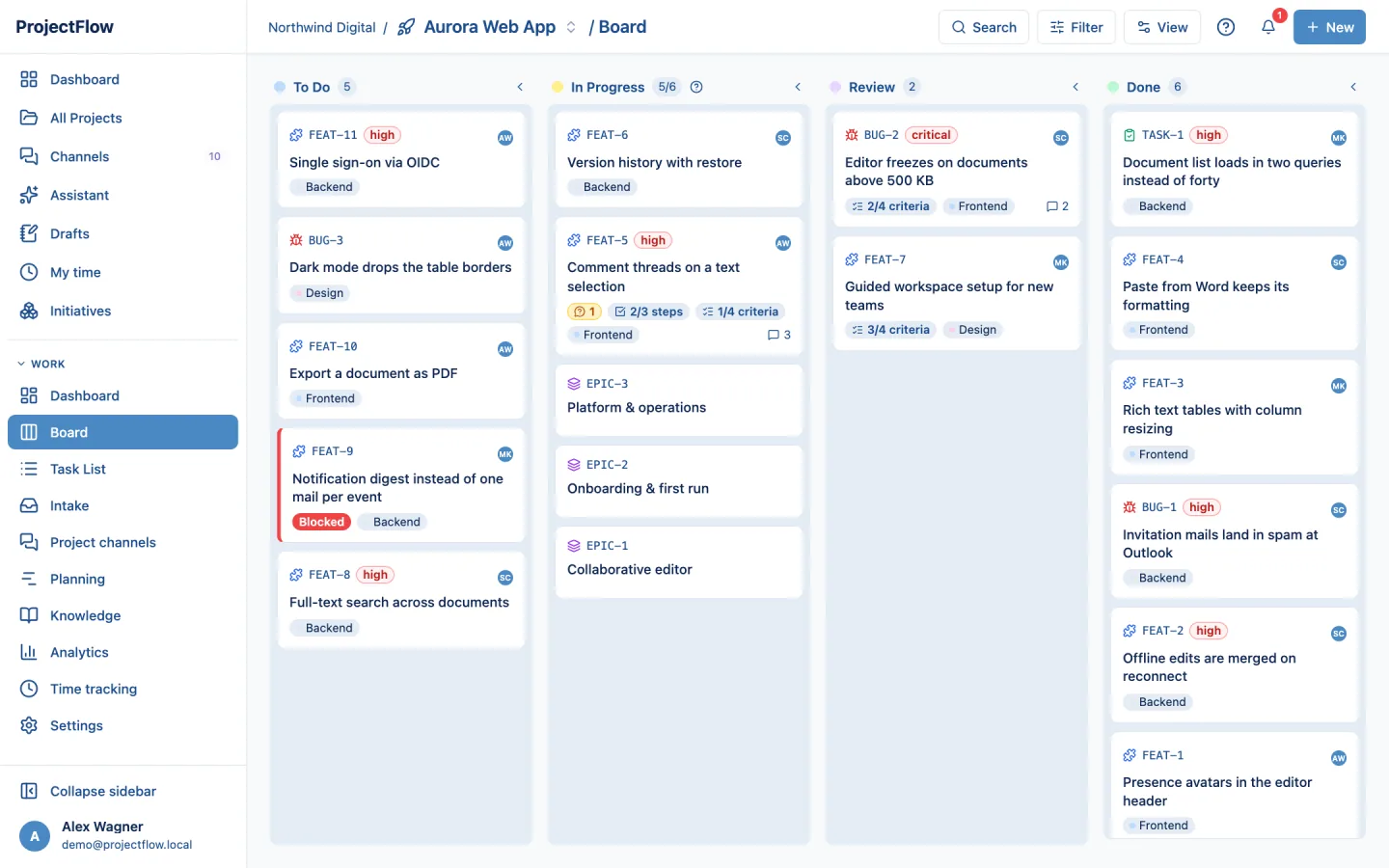
Kanban board
Drag and drop through columns you define yourself. WIP limits keep a column honest, epics group the work, and a blocked item says so on the card.
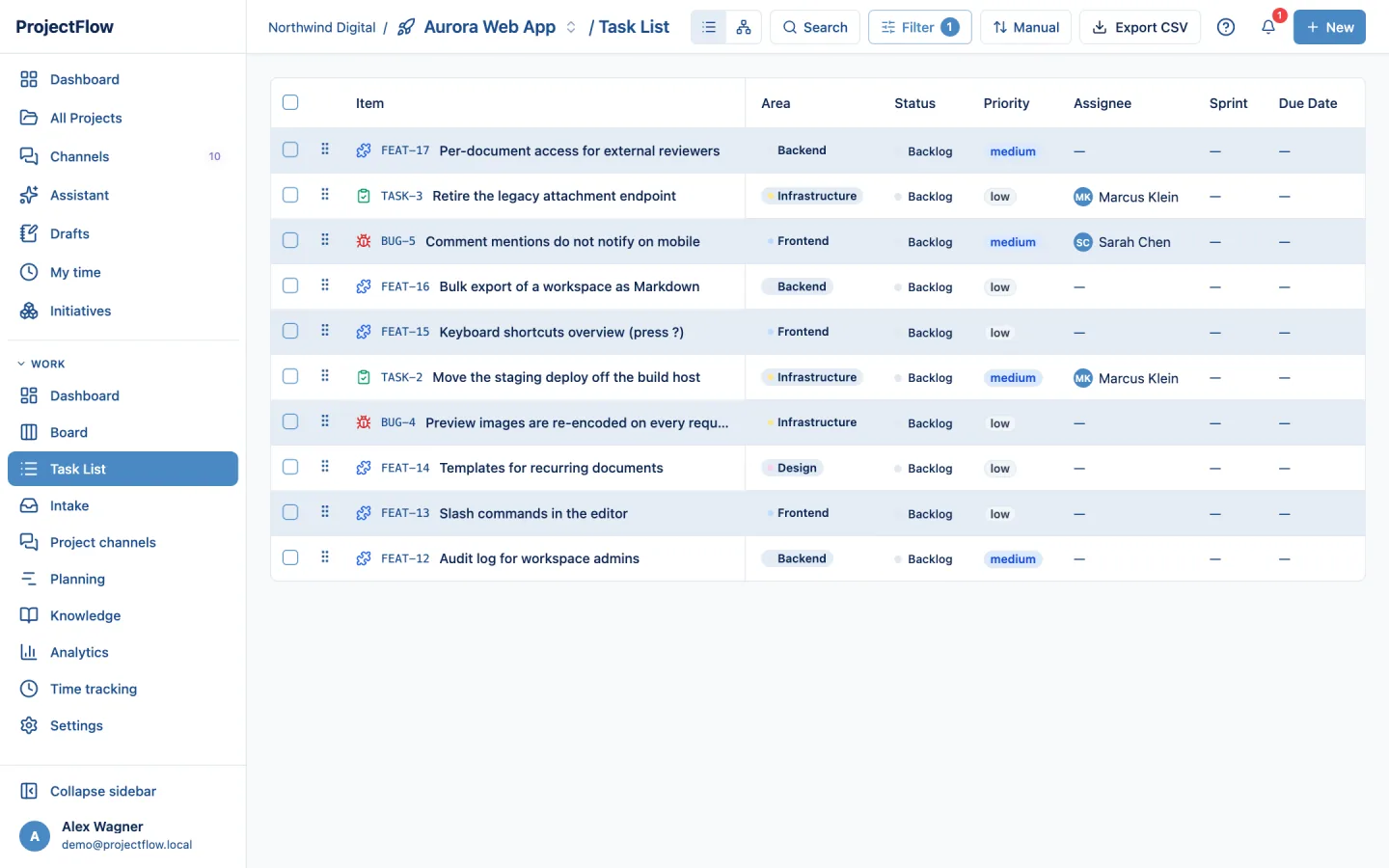
Task List
Every item in one table: filter by status, area, assignee or type, edit several at once, and export what is left as CSV.
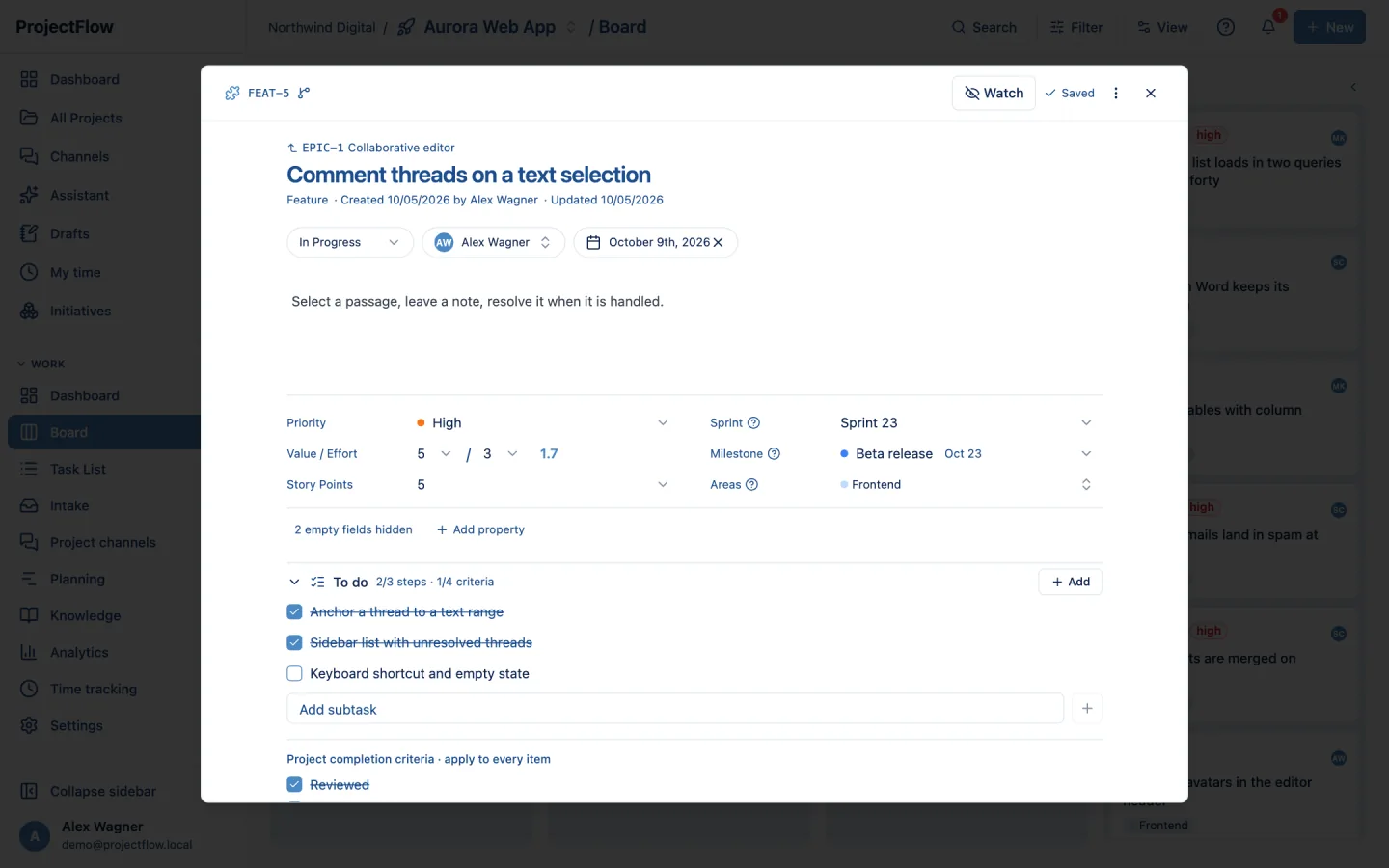
An item holds the whole story
Rich text, subtasks, done criteria, dependencies, attachments, story points, a value/effort score and recorded time — on one page.
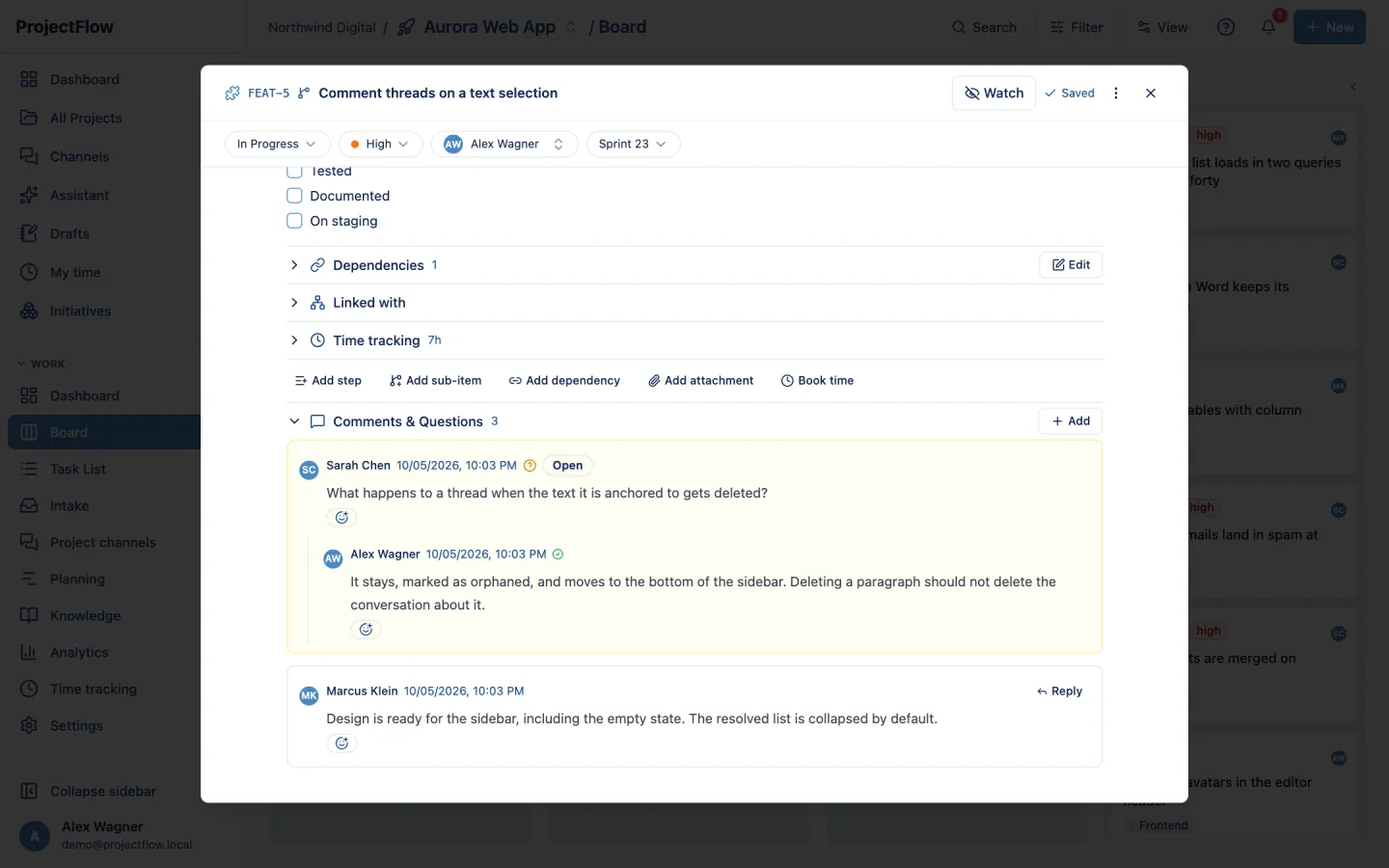
Questions that get answered
Comments, questions and answers live on the item. An open question is visible on the board card, so nobody has to remember it.
Intake
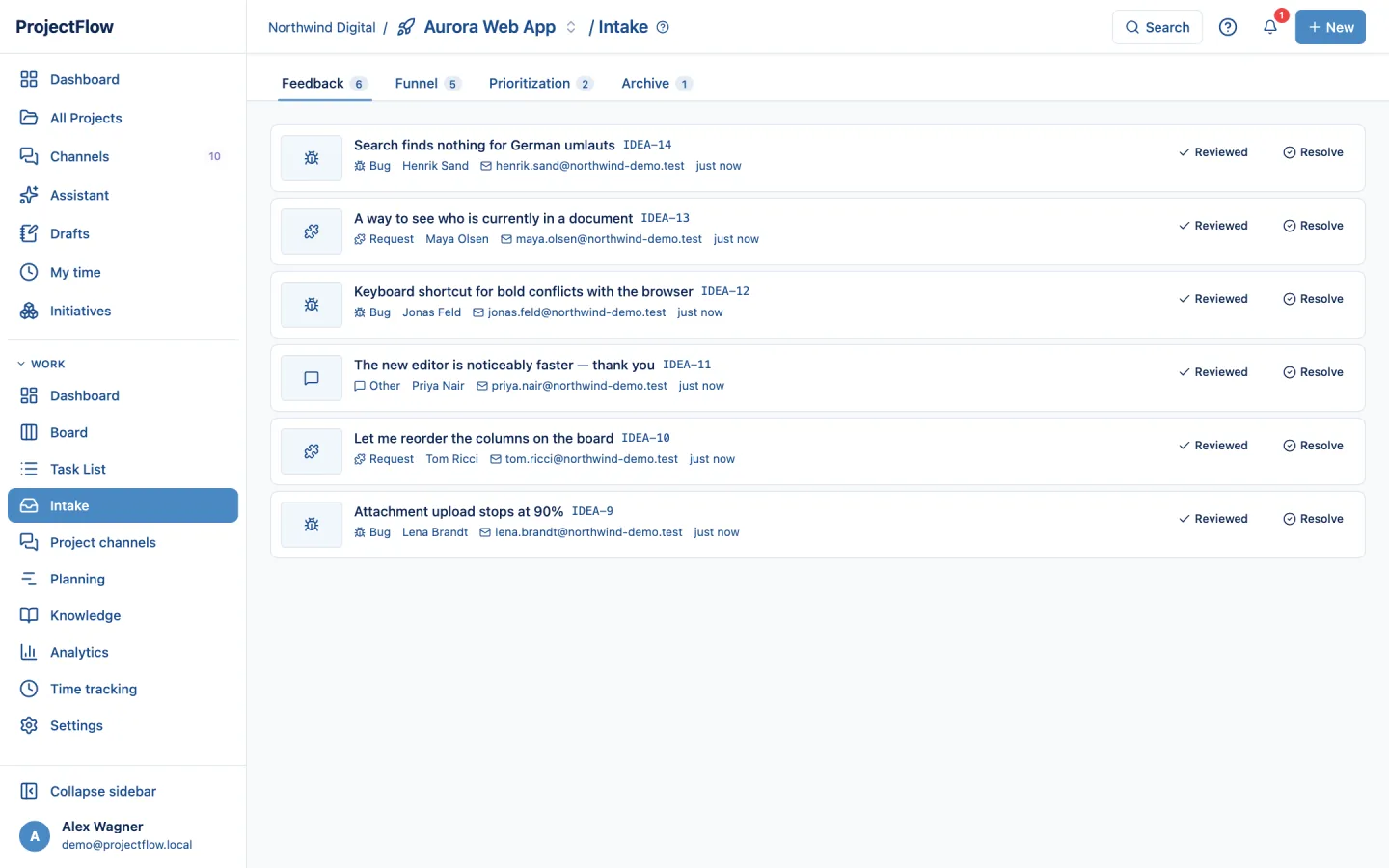
Feedback from the in-app widget and the public form lands in one intake with its sender, its context and its screenshot. Read it, answer it, or turn it into work.
Ideas with a funnel
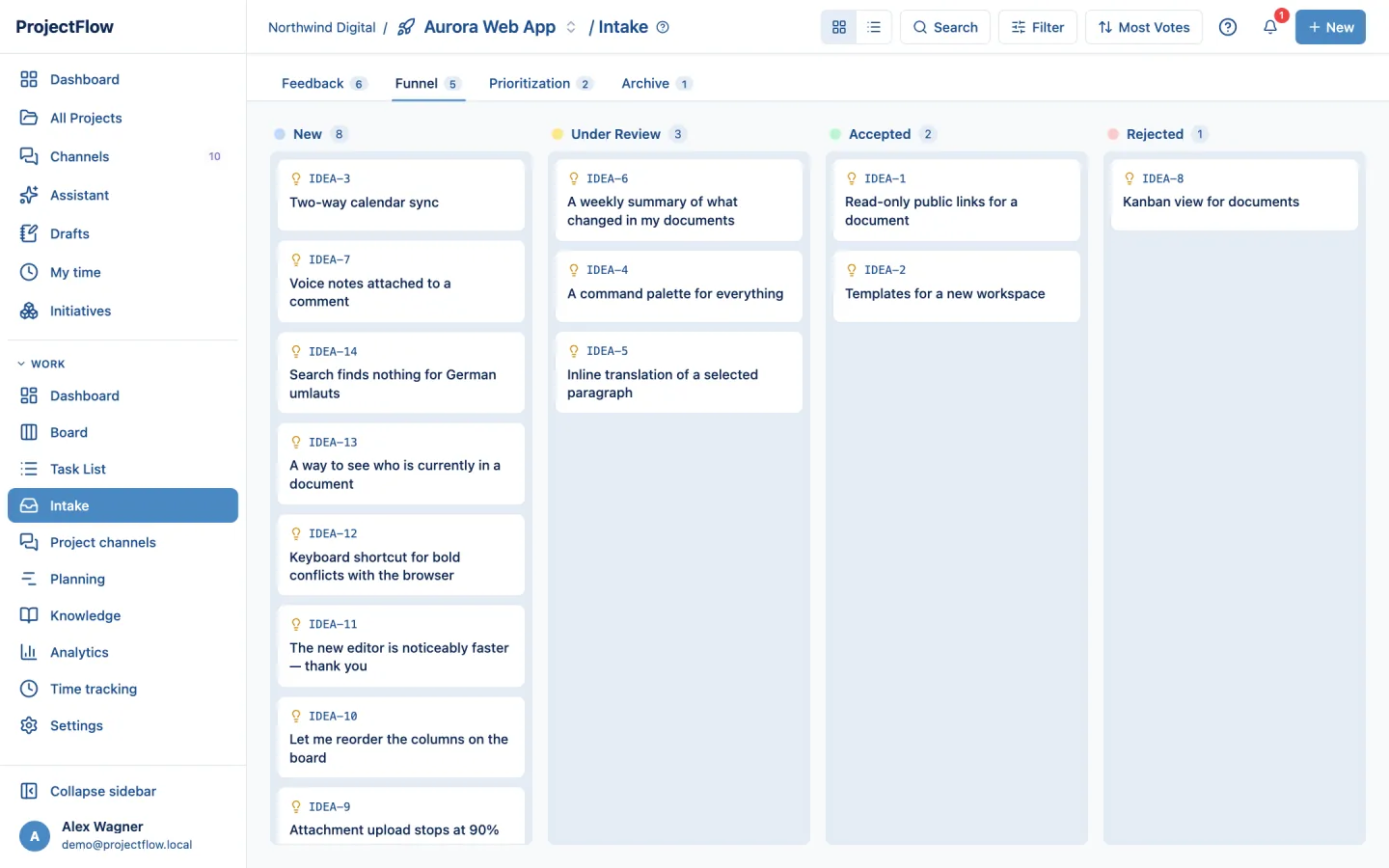
Ideas get their own lifecycle — new, under review, accepted, rejected — plus votes and a prioritisation view, so the task list stays what is actually being built.
Sprint planning
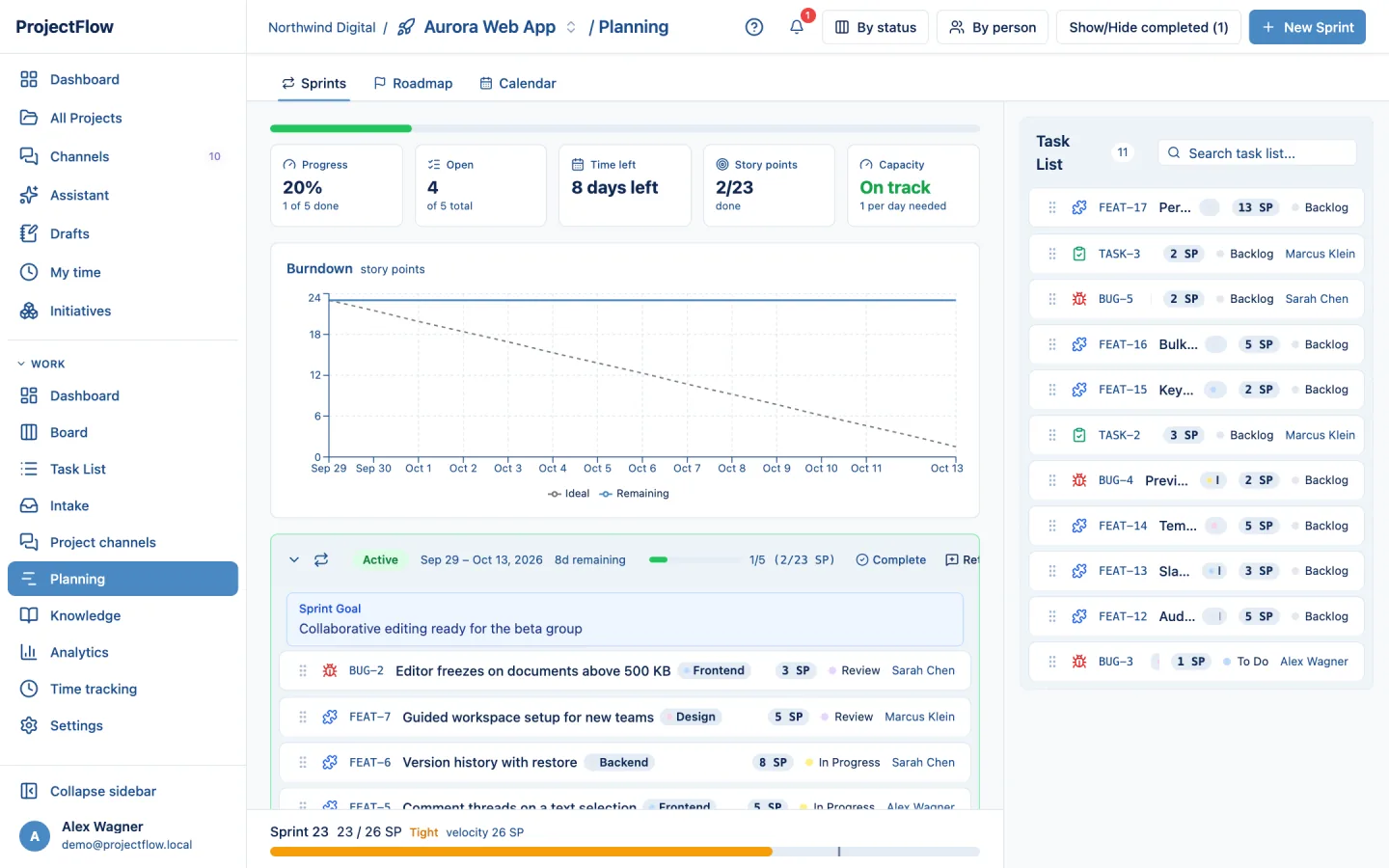
A sprint with a goal, a burndown, capacity against the team velocity, and the task list next to it to pull from.
Roadmap and milestones
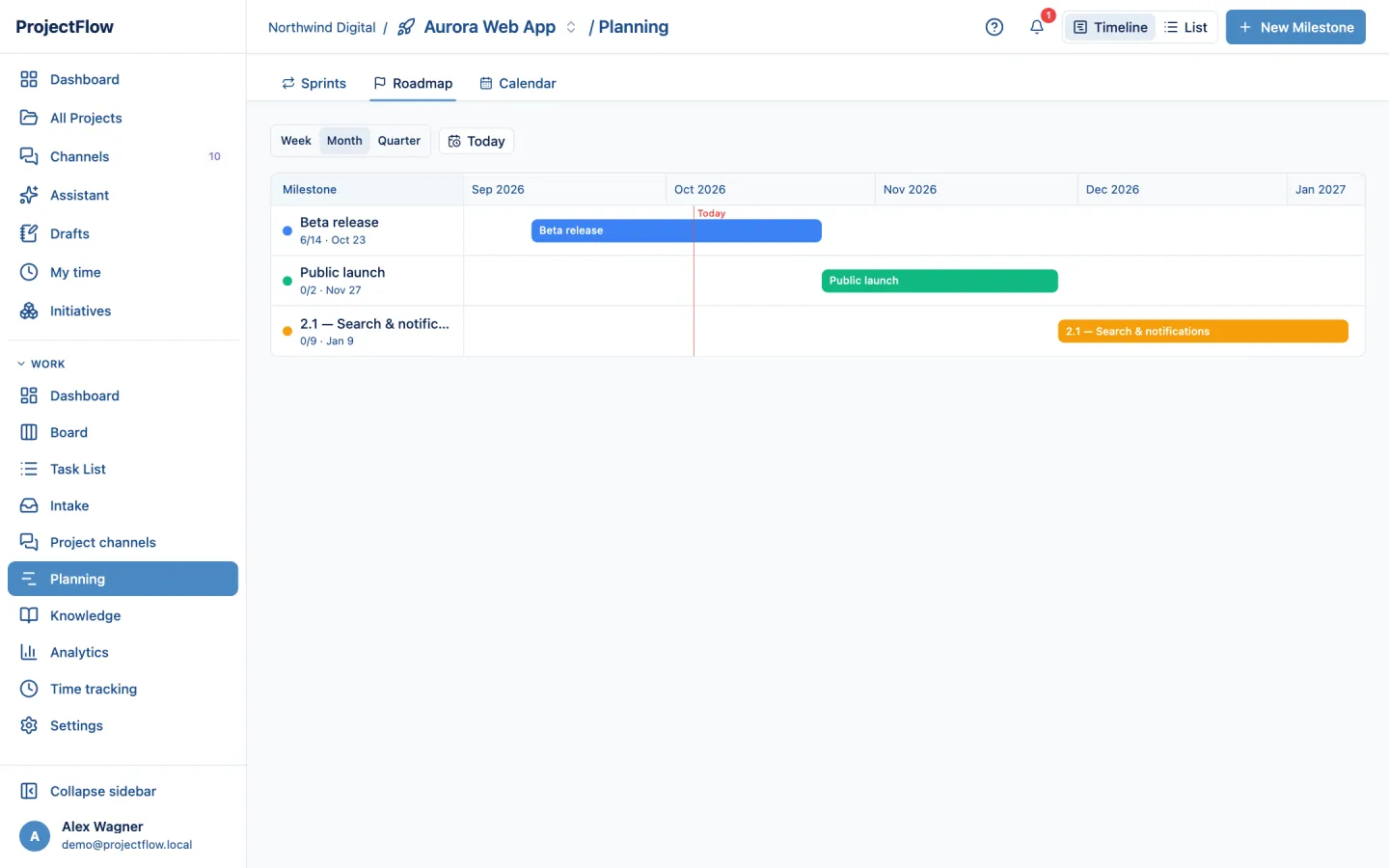
Milestones on a timeline by week, month or quarter, each one showing how much of its work is done.
Dependencies
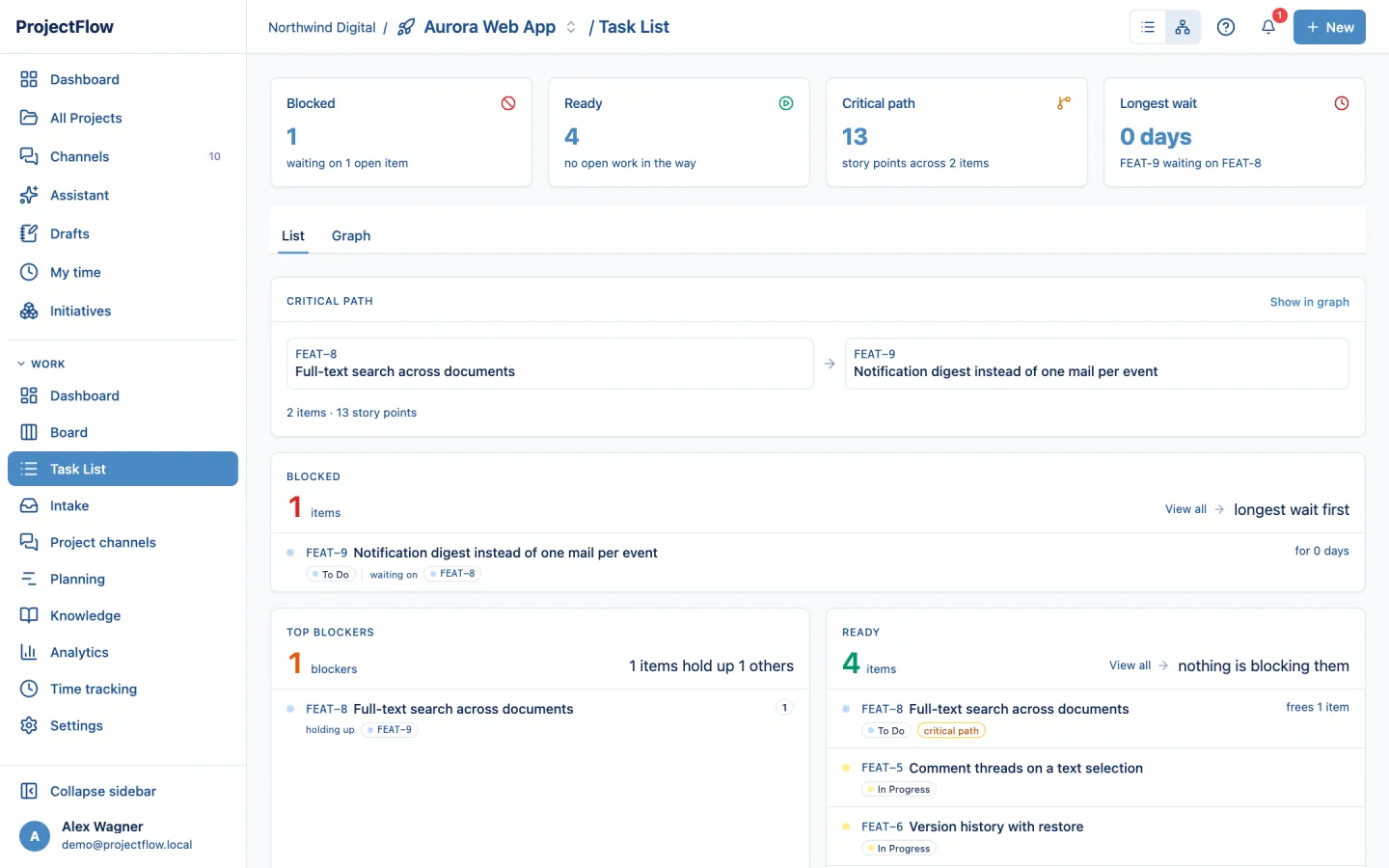
What is blocked, what is holding it up, what the critical path costs — as a list and as a graph. Cycles are refused before they exist.
Knowledge and decision records
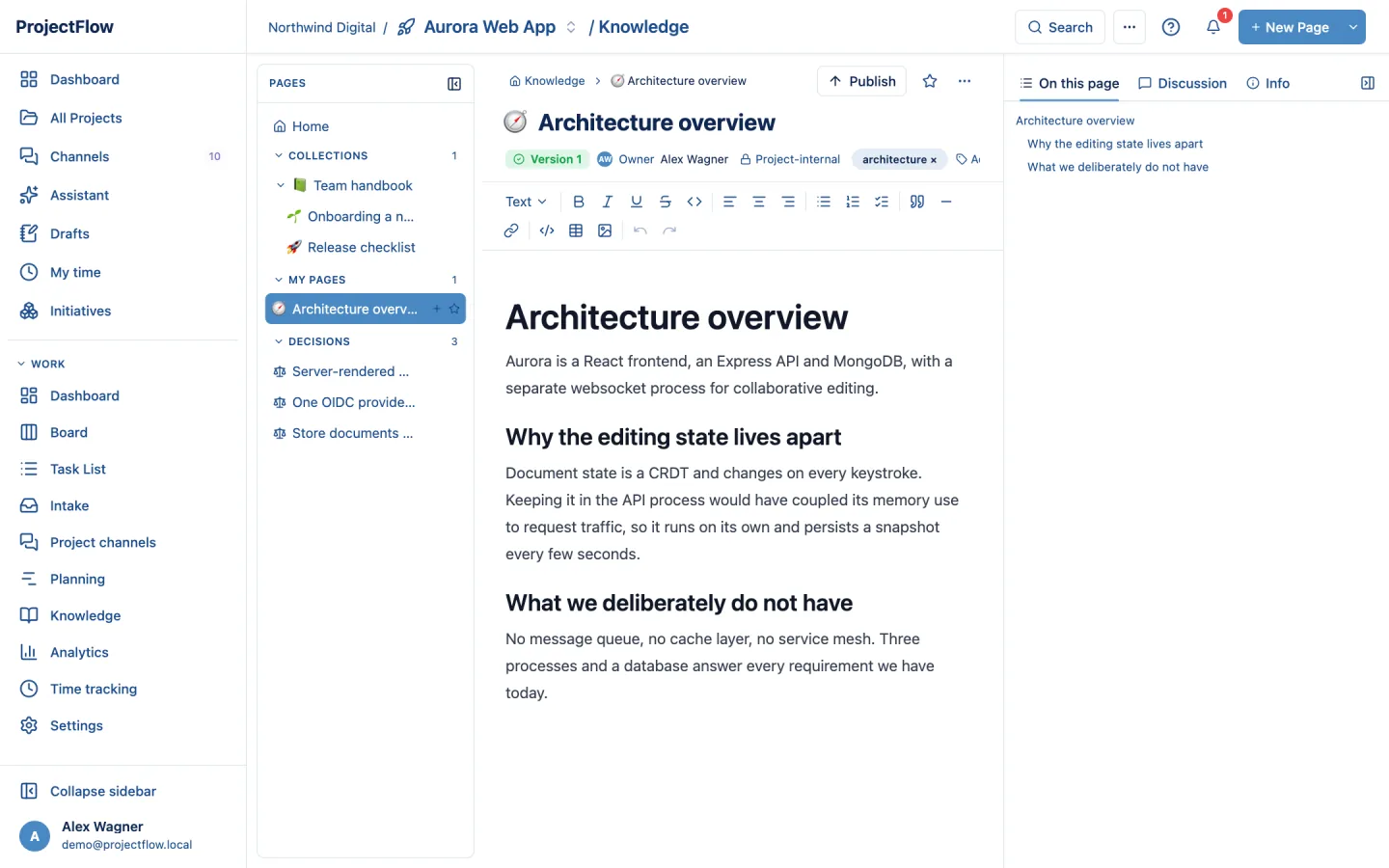
Pages in a tree, versions with a change note, review dates, comments and collaborative editing. Architecture decisions are pages with a status, not a folder of files.
Channels
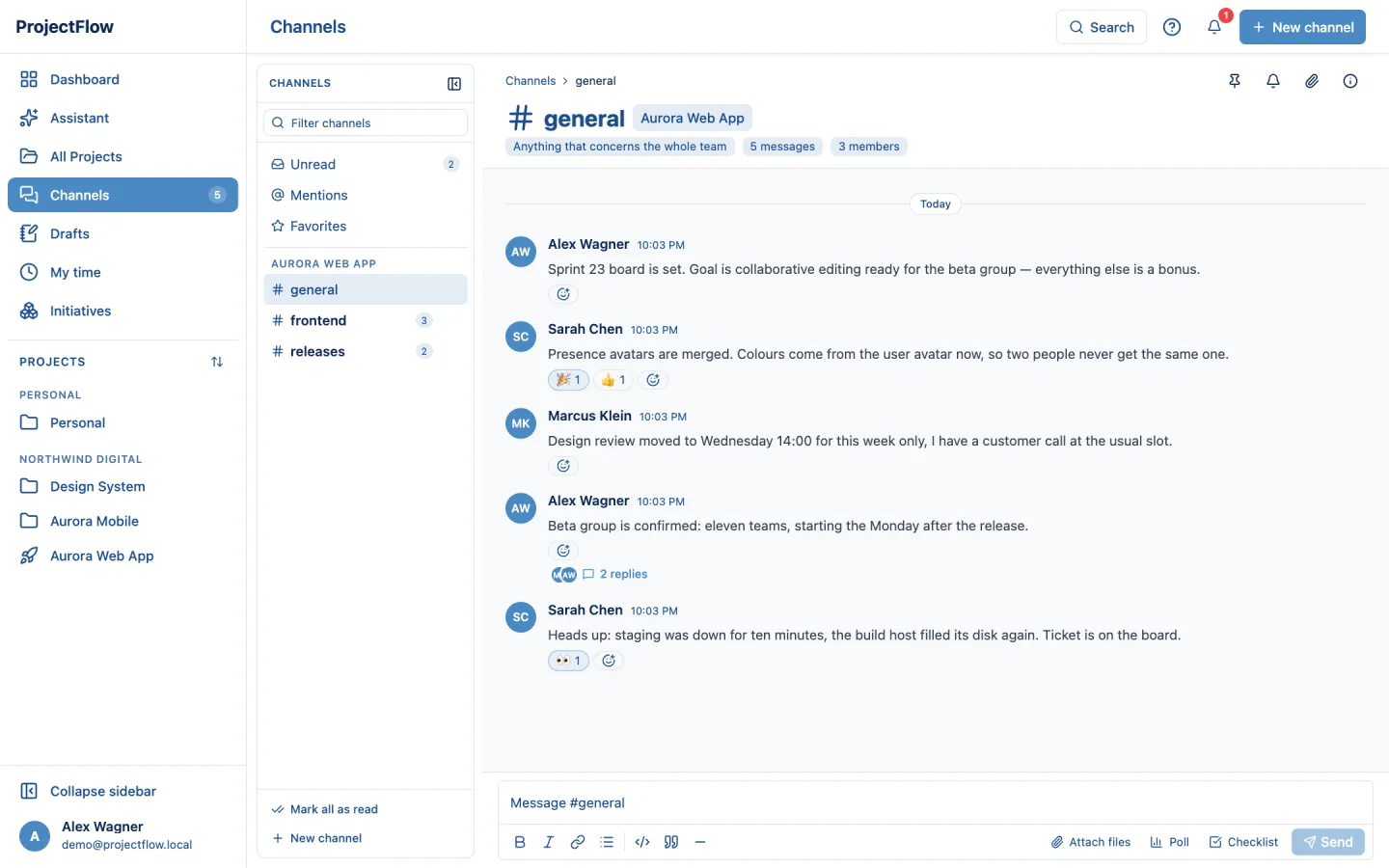
Channels per project or workspace, threads, reactions, polls and checklists. A message becomes an item or a decision record without leaving the conversation.
Time tracking
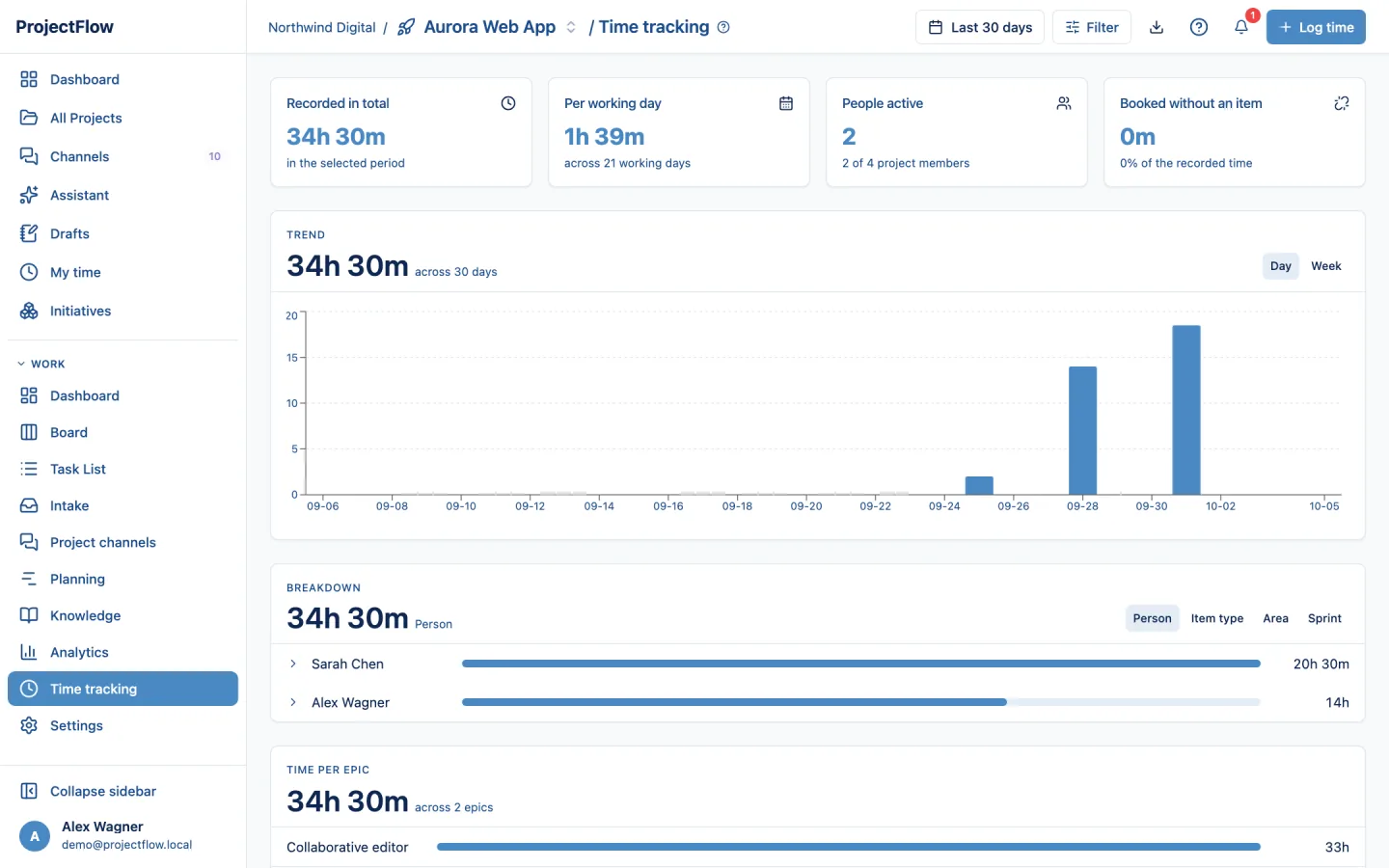
A timer on the item or an entry after the fact, a trend over the period, and a breakdown by person, type, area or sprint — exportable as CSV.
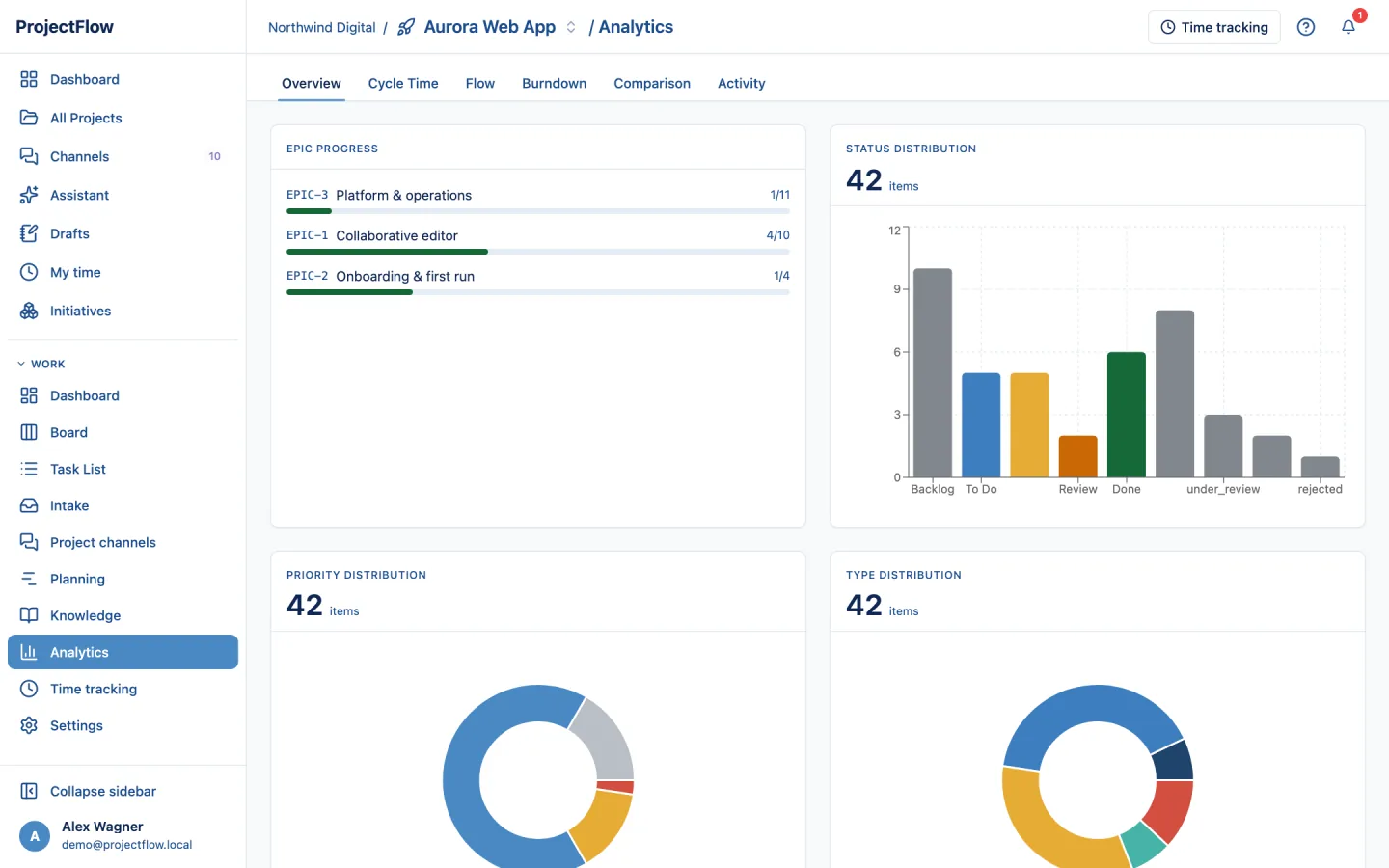
Analytics
Cycle time, cumulative flow, burndown, sprint comparisons and the distributions that tell you where work piles up.
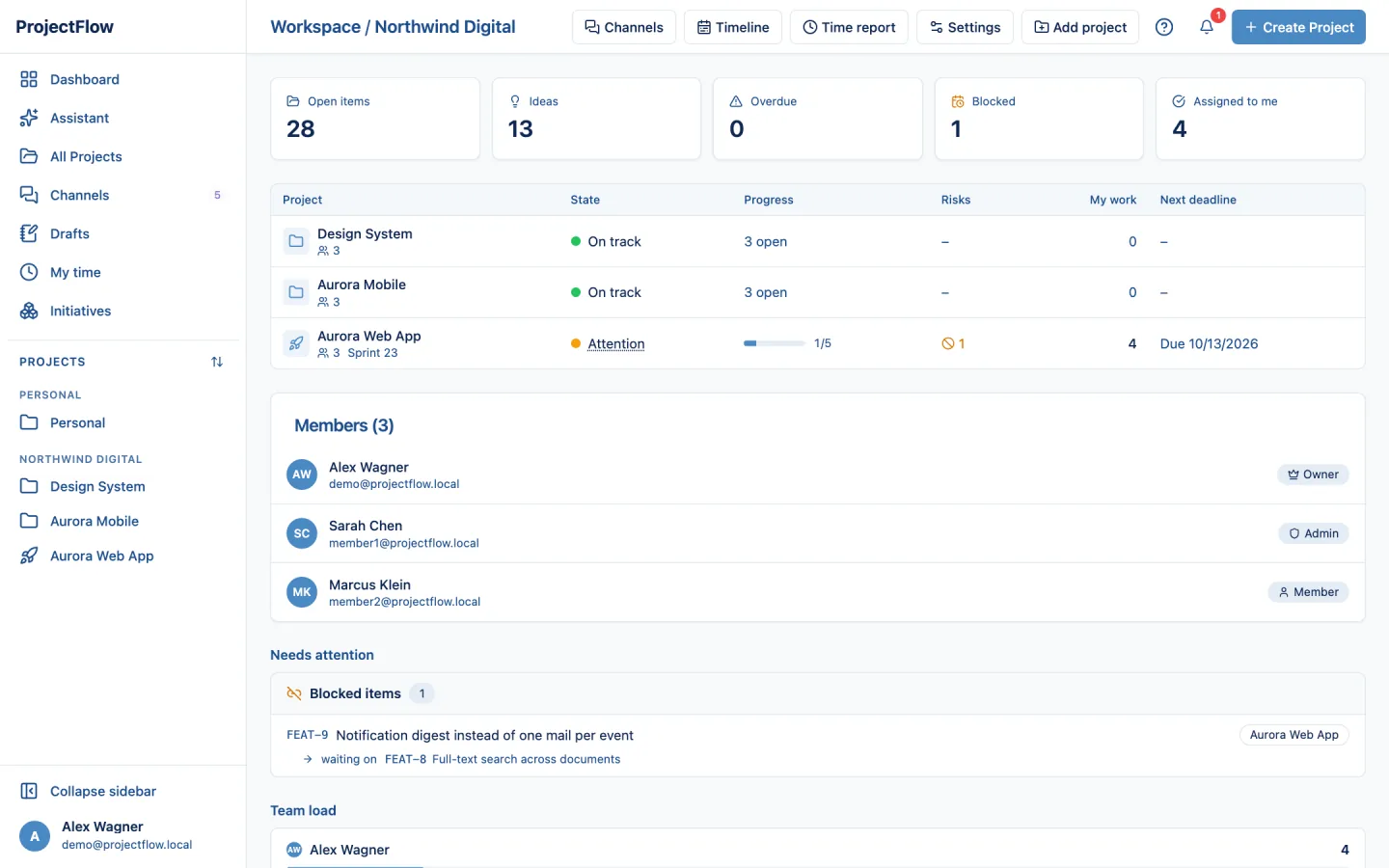
Workspaces
Several projects as one picture: state, progress, risks, blocked work, team load and the next deadline across all of them.
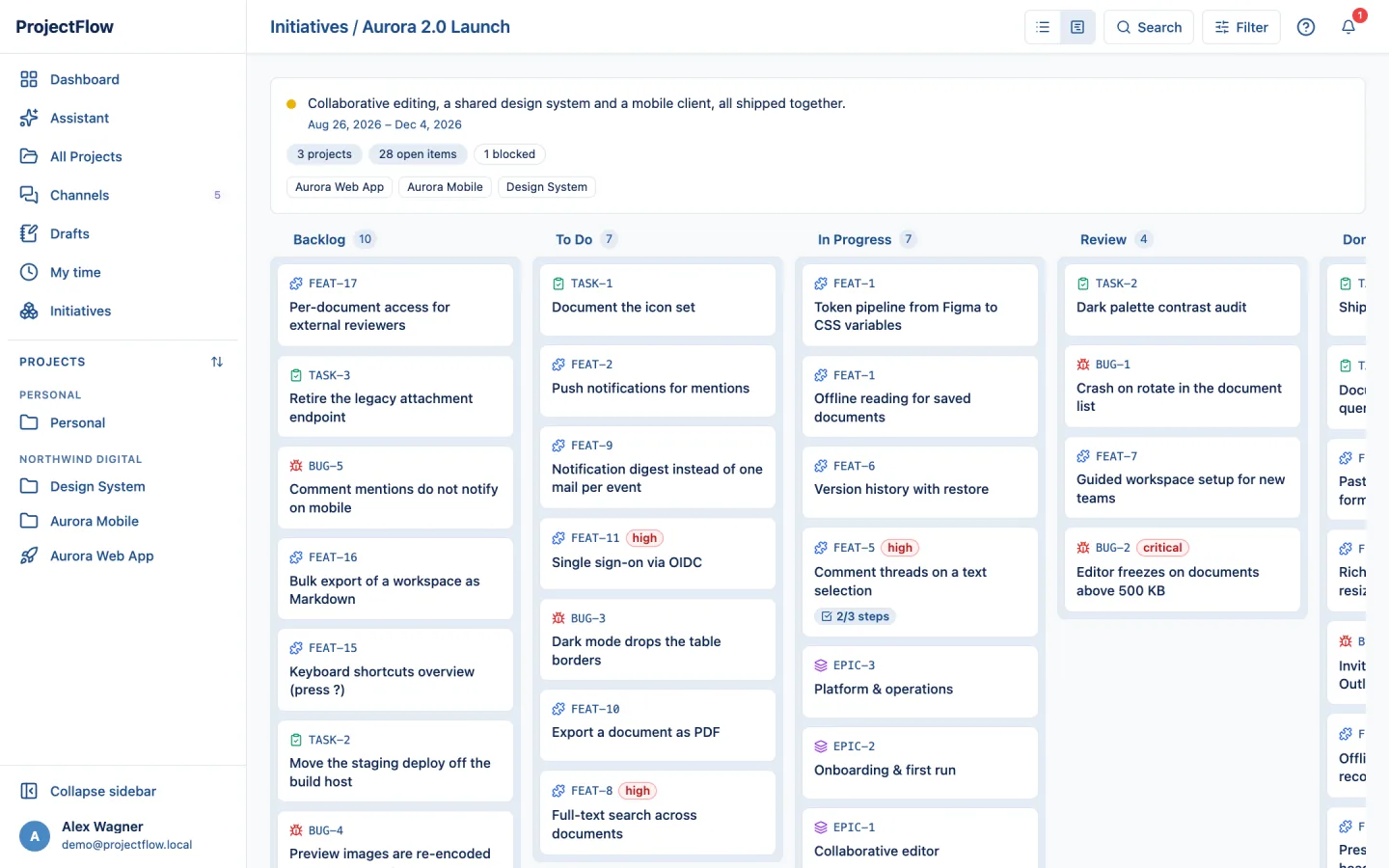
Initiatives
Work that spans projects gets its own board and timeline — one release, three teams, one view.
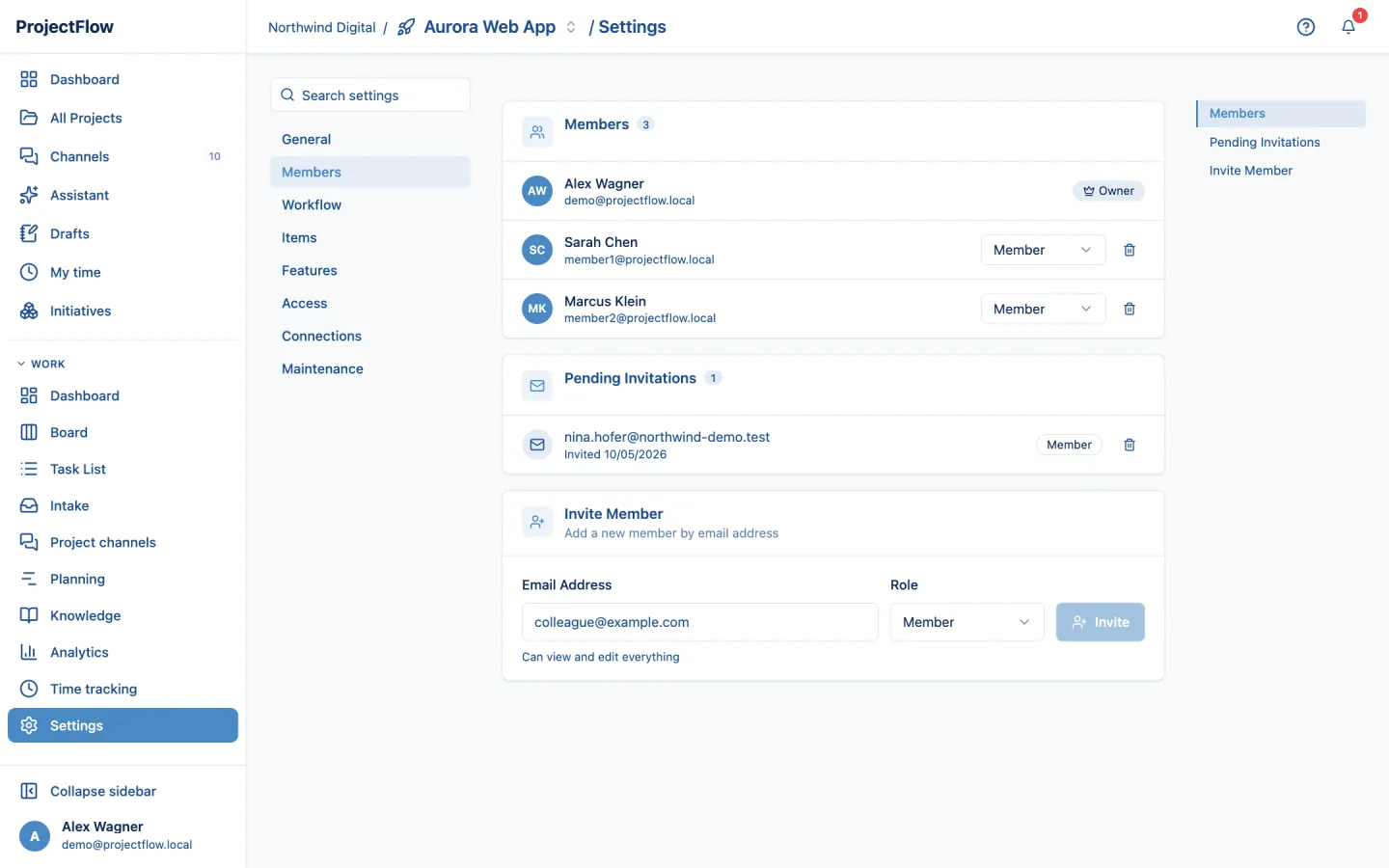
Team and roles
Invite by email, with or without an account. Owner, member and read-only roles, and an invitation stays pending until the person accepts it.
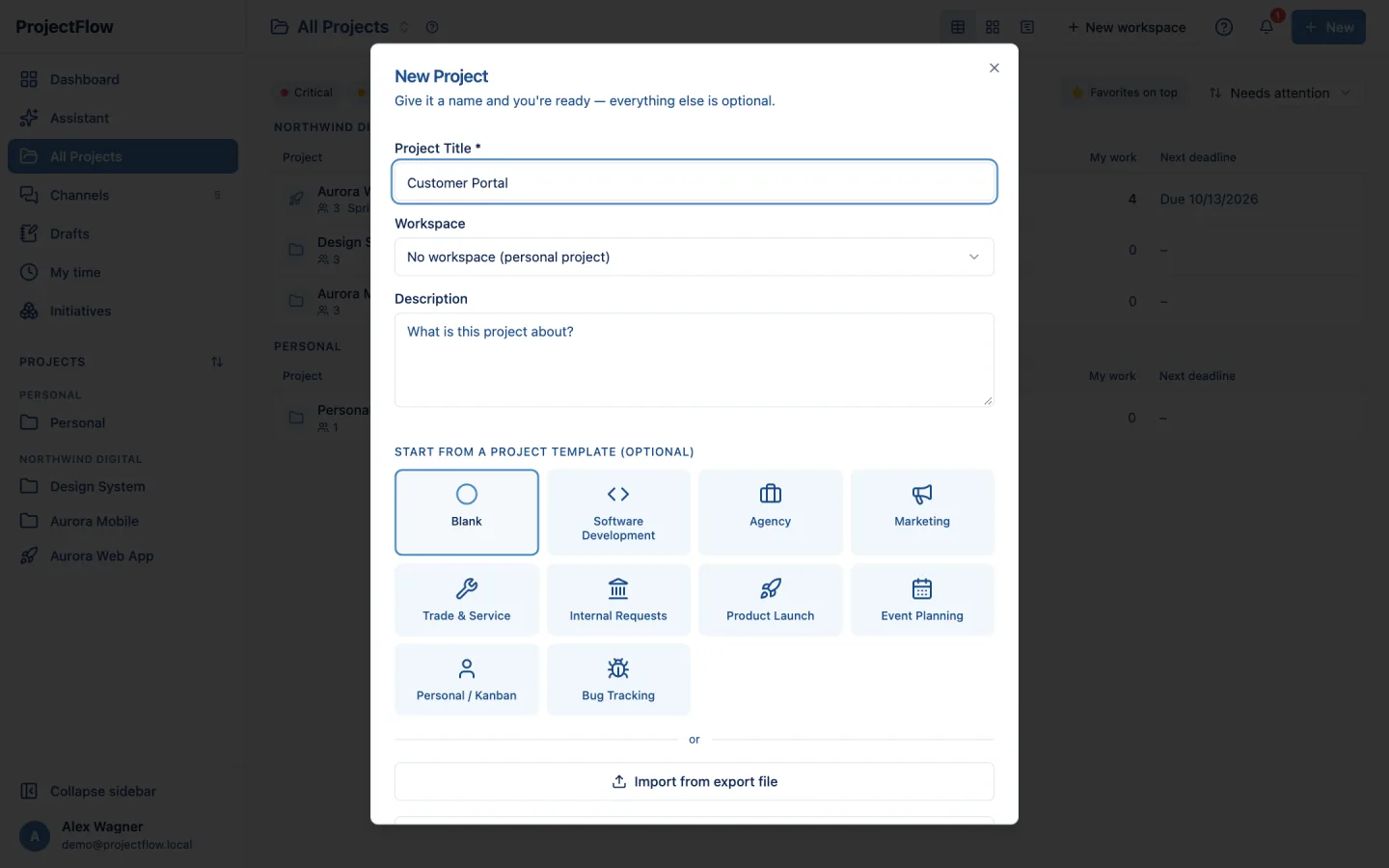
A project in seconds
Title, and you are on the board. The wizard covers columns, areas, modules and item types when you want it — or import an exported project.
What a screenshot cannot show
The parts that happen behind the pages.
Built in Germany
ProjectFlow is a European product, built in Germany. The AI assistant is optional: a workspace picks its own provider, for example Mistral as a European one, or enters its own endpoint.
Security and GDPR
Two-factor auth, optional OIDC single sign-on, account lockout, rate limits, encrypted integration secrets, data export and account deletion, so GDPR rights can be exercised in the app itself — and no tracking of any kind.
Self-hosting without the ceremony
Docker Compose, Nginx and MongoDB. One environment file, one command, daily backups included. Your data stays on your own server, and you decide which country it is in.
API, MCP and automation
A REST API with per-project keys, a built-in MCP server so AI clients can work the board directly, webhooks, an n8n node, and integrations for Slack, Discord, GitHub, GitLab and Sentry.